Institute for Medical Engineering and Science
The Institute for Medical Engineering and Science (IMES) pioneers research and education at the intersection of engineering, science and medicine to transform human health for all.
Technical Skills
- Infectious Diseases
- Medical imaging
- Medical devices and diagnostics
- Computational medicine and AI
- Genomic/molecular/cellular research
Common Careers
- Academic Research/Faculty
- Biotechnology
- Consulting & Venture Capital
- Medical Devices
- Public Health & Policy


About
Accelerating innovation in human health
We accelerate innovation in human health by integrating, nurturing, and translating MIT’s strengths in science and technology, medicine and physiology, clinical and translational research, and entrepreneurship. IMES is a portal for strategic alliances with hospitals and industry and is MIT’s home for the Harvard-MIT Program in Health Sciences and Technology (HST).
IMES Degrees
Graduate
- Medical Engineering and Medical Physics (MEMP) Doctorate (via MIT)
- Medical Doctorate (MD) (via Harvard Medical School, HMS)
Why Choose IMES?
The Medical Engineering and Medical Physics (MEMP) Doctorate program differs significantly from many biomedical engineering (BME) doctoral programs because of its breadth and its depth in multiple dimensions. It not only emphasizes grounding in a classical discipline but also provides much more exposure to the medical sciences than most BME programs. This exposure comes in many forms, including biomedical sciences coursework in which MD students are peers, as well as through multiple clinical experiences. The MEMP program also provides an open environment that allows students to follow their interests even when they cross the conventional barriers between disciplines, professions and institutions.
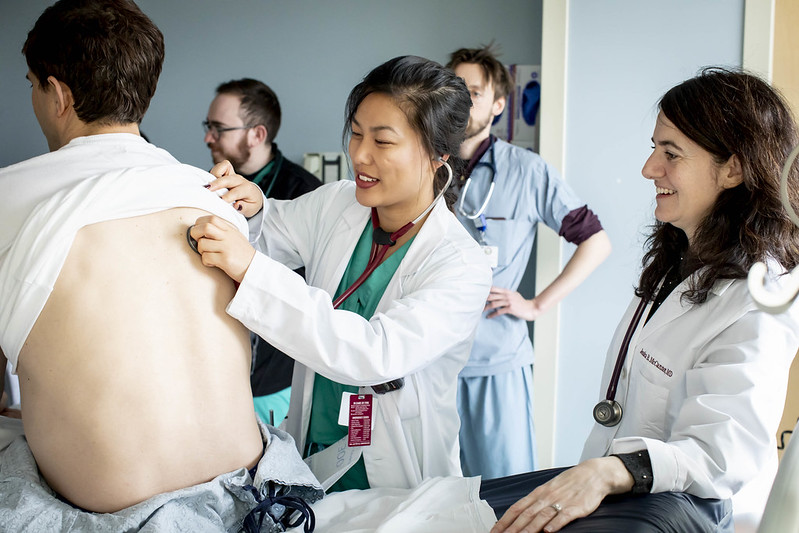
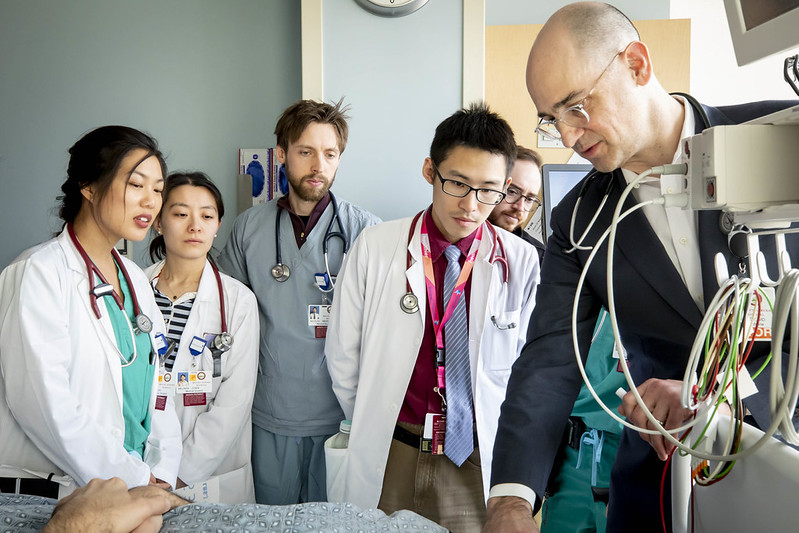
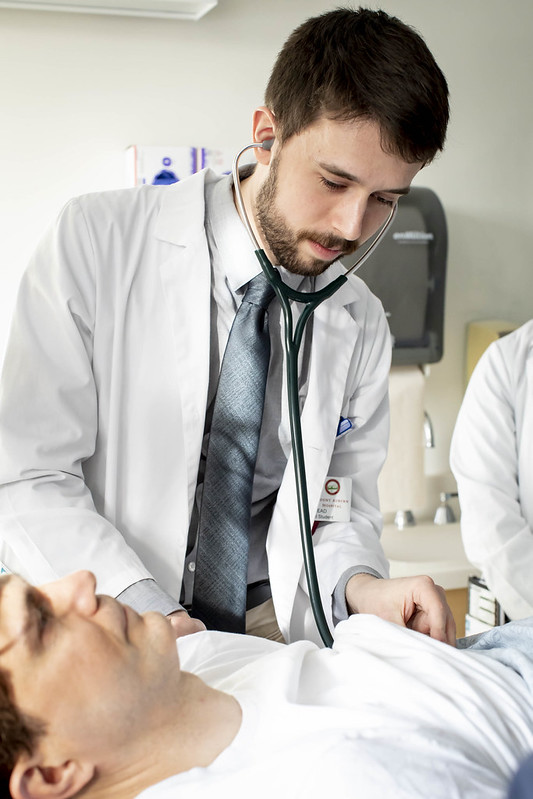
Alumni tell us that the HST Introduction to Clinical Medicine (ICM), which is the capstone experience differentiating MEMP from traditional BME programs, is transformative and has a major impact on their careers.
MIT sits at the epicenter of a life sciences revolution, with Boston and Cambridge receiving a combined $2 billion in grants from the NIH. Varesh Prasad, a PhD candidate in the Harvard-MIT Health Sciences and Technology program, is focusing his research on the data hospitals collect.
HARVARD-MIT PROGRAM IN HEALTH SCIENCES AND TECHNOLOGY (HST)
The Harvard-MIT Program in Health Sciences and Technology (HST), housed within the Institute for Medical Engineering and Science (IMES) at MIT, unites engineering, science, and clinical medicine to drive innovation in human health. A joint initiative with Harvard, HST trains clinician-scientists and engineers to translate discoveries from bench to bedside through rigorous research, quantitative training, and clinical immersion. Its graduates lead transformative advances across medicine and biotechnology, from diagnostic breakthroughs to novel therapies.
Quick LinksAdmissions Academic Programs Finding A Lab



Faculty Spotlights
All IMES Faculty
Laura Lewis
Associate Professor
-
Chair
Athinoula A. Martinos Associate Professor
-
Department(s)
-
Lab
-
Research area
Sleep states; neurobiological origins of sleep; neural circuits

Collin M. Stultz
Professor
-
Chair
Nina T. and Robert H. Rubin Professor
-
Department(s)
Electrical Engineering and Computer Science; Institute for Medical Engineering and Science
-
Lab
-
Research areas
Molecular simulations, protein structure and dynamics, biophysics, disease models, atherosclerosis, Alzheimer’s disease, rheumatoid arthritis, stochastic models, function optimization

Sangeeta Bhatia
Professor
-
Chair
John and Dorothy Wilson Professor
-
Department
-
Lab
-
Research area
Biological and Medical Devices and Systems; Computational Fabrication and Manufacturing; Nanoscale Materials, Devices, and Systems

Thomas Heldt
Professor
-
Chair
Richard J. Cohen (1976) Professor
-
Department(s)
Institute for Medical Engineering and Science; Electrical Engineering and Computer Science
-
Lab
-
Research area
AI for Healthcare and Life Sciences; Biological and Medical Devices and Systems; Signal Processing


Affiliated Research Labs and Centers
Sirma Orguc SM ’16 PhD ‘21 uses computational neuroscience to probe the brain’s “black box” for clues on its function.
Class Highlights
- HST.090: Cardiovascular Pathophysiology
- HST.207: Introduction to Clinical Medicine and Medical Engineering
- HST.500: Frontiers in (Bio)Medical Engineering and Physics