Zane Schemmer Receives 2026 Graduate Student Extraordinary Teaching and Mentoring Award
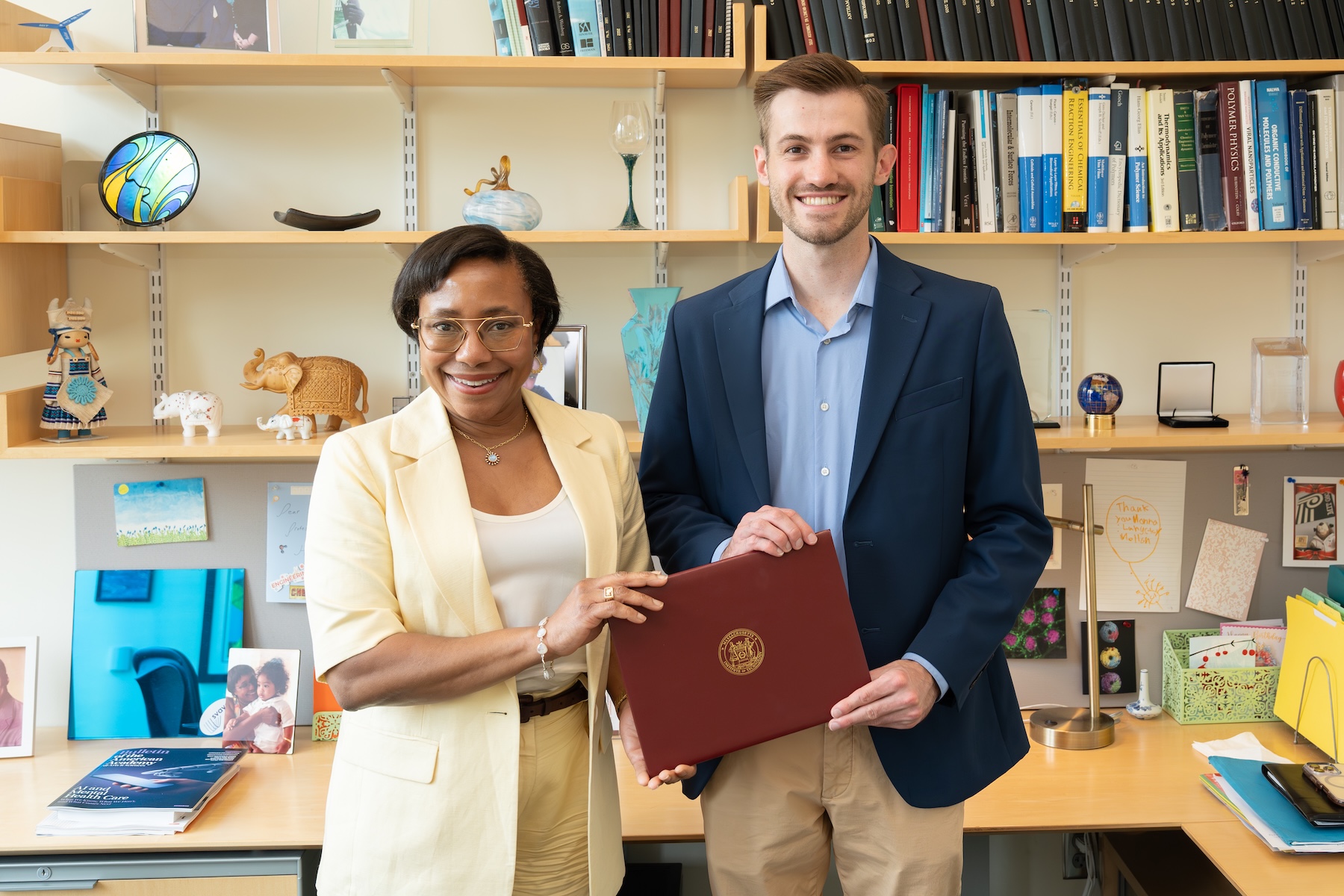
Zane Schemmer, a PhD candidate in the MIT Department of Civil and Environmental Engineering (CEE), is a recipient of 2026 Graduate Student Extraordinary Teaching and Mentoring Award. The award recognizes graduate students who have demonstrated extraordinary teaching and mentoring efforts as a teaching or research assistant.
When asked about the most important part of having a mentor, Schemmer emphasized the “insider information” and “fresh perspectives” mentors provide to those who are picking their field of interest.
“Mentorship helps the mentee determine if their field of interest is right for them and what steps they need to take in order to succeed,” he says. “It is also important for mentors to learn from their mentees to understand how a field needs to adapt to stay relevant and accommodate new ideas.”
This spring, Schemmer worked as a teaching assistant in MIT classes 1.563: Analysis and Design of Tall Buildings, and 1.541: Mechanics and Design of Concrete Structures. He has been a TA since he began his PhD program nearly four years ago. He describes his approach to teaching as “doing the simple things really well,” emphasizing the need for enthusiasm about the subject matter and the ability to “include all basic details when discussing new topics.”
“Enthusiasm and passion for the subject material is important because instructors cannot expect students to stay engaged and motivated with the course if the teacher themself does not appear excited about what they are discussing,” he says. “I think it’s important to remember that we were all once sitting in the student’s seat and learning topics for the first time. It’s critical to include basic details even if they feel redundant, because information that instructors take for granted is often entirely new or still sinking in for students.”
Working with Josephine Carstensen, the Gilbert W. Winslow Career Development Associate Professor of Civil and Environmental Engineering at MIT, Schemmer researches ways to minimize the carbon footprint of the built environment by designing efficient structures that consider the availability of local materials.
Schemmer credits Carstensen for having the greatest impact on his approach to mentoring and teaching.
“She leads by example and shows tremendous care for all of her mentees. Josephine stands out for her commitment and compassion for her students. She shows that there is more to life than just research and how a good work-life balance can actually increase productivity and overall satisfaction with one’s work,” he says.
Before his time at MIT, Schemmer completed his undergraduate and master’s degrees in civil and environmental engineering at the University of California, Berkeley. He joined the MIT community in 2022 when he began his PhD program. Schemmer enjoys being an active member of the MIT community. He serves as the President of the MIT Club Golf team, a Grad Diversity Ambassador for the Office of Graduate Education, and a Board Member of CEE GradCom.