School of Engineering welcomes new faculty in 2026
The newest MIT engineering faculty are conducting research across a diverse range of subject areas.
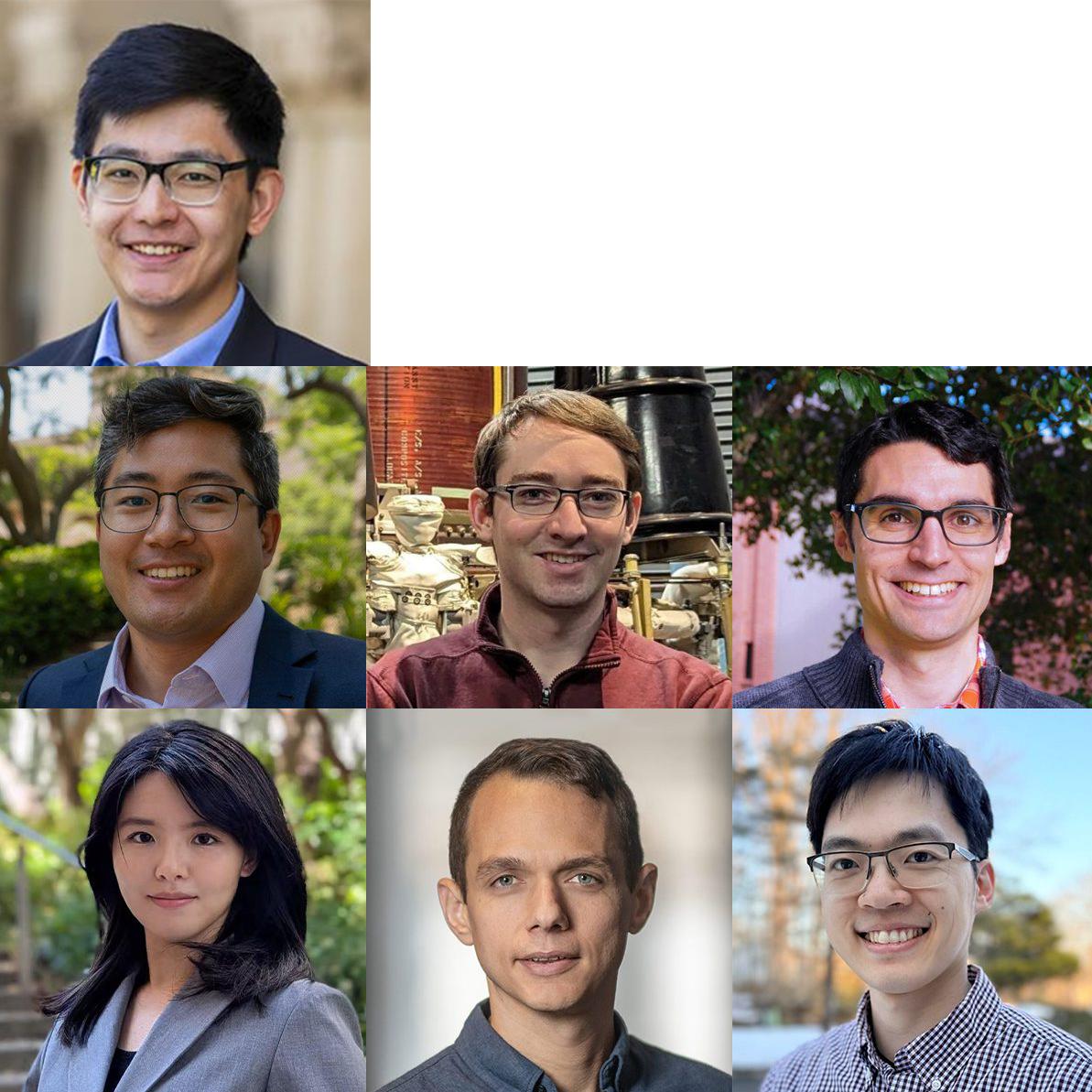
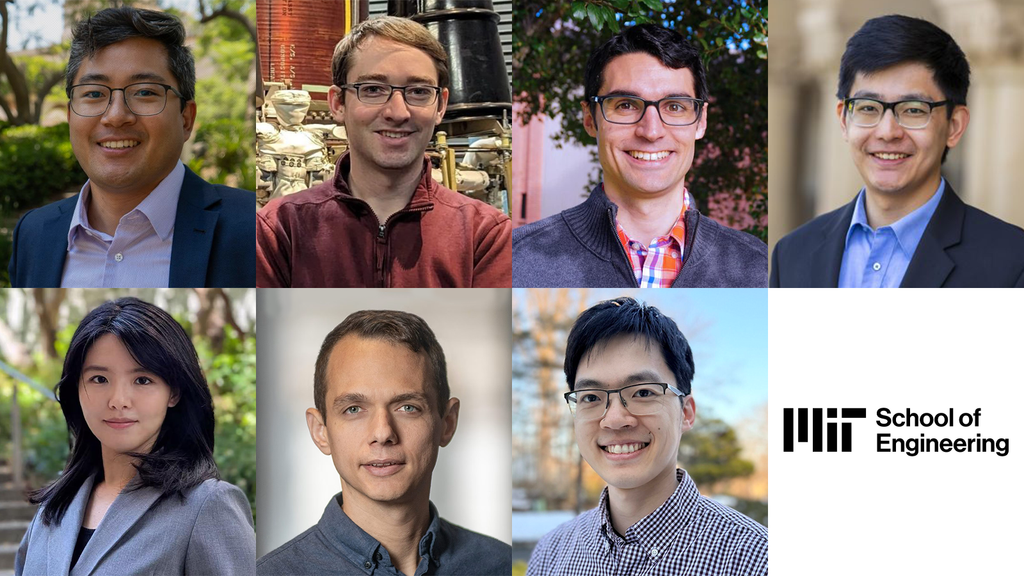
The MIT School of Engineering welcomes new faculty members across six of its academic units. This new cohort of faculty members, who have recently started their roles at MIT, conduct research across a diverse range of disciplines.
“I’m pleased to welcome these talented colleagues to our engineering faculty,” says Paula T. Hammond, Dean of Engineering and an Institute Professor. “They bring fresh perspectives that will open new directions for research and create opportunities for our students to learn through discovery. I look forward to supporting them as they pursue ambitious ideas, build collaborations across MIT, and help our students grow both in the classroom and in the lab.”
Faculty with appointments in the Department of Electrical Engineering and Computer Science (EECS) and the Institute for Data, Systems, and Society (IDSS) report into both the School of Engineering and the MIT Stephen A. Schwarzman College of Computing.
The new engineering faculty include:
Andrew Akerson joined the Department of Mechanical Engineering as an assistant professor in January 2026. His research interests include optimal design, computational solid mechanics, and material characterization. He previously worked as a research scientist at Meta’s Reality Labs Research. Akerson received his BS and MS in aerospace engineering and mechanics from the University of Minnesota and his PhD in mechanical engineering from Caltech.
Jake Hecla, the Charles Stark Draper Career Development Professor, joined the departments of Aeronautics and Astronautics and Nuclear Science and Engineering as an assistant professor in July 2026. His current research interests focus on aerospace nuclear power and propulsion, heat rejection in space, and long-standoff characterization techniques for space nuclear systems. Previously, Hecla was a Stanton Postdoctoral Fellow in the MIT Laboratory for Nuclear Security and Policy. He holds a BS in nuclear science and engineering from MIT and an MS and PhD in nuclear engineering from the University of California, Berkeley.
Zachary Manchester, the Boeing Career Development Professor, joined the Department of Aeronautics and Astronautics as an associate professor in January 2026. He is interested in building autonomous systems that match and, eventually, surpass the levels of performance, agility, and reliability of humans. He previously taught in the Robotics Institute at Carnegie Mellon University. Manchester received his BS in applied physics, his MEng in mechanical engineering, and his PhD in aerospace engineering from Cornell.
Eric Sun joined the Department of Biological Engineering as an assistant professor in January 2026. He develops new computational and machine learning models to study complex biology across multiple scales with applications in aging, rejuvenation, and immune interactions. Sun is also a Member of the Ragon Institute of Mass General Brigham, MIT, and Harvard. He obtained his BS in chemistry and physics and his MS in applied mathematics from Harvard and his PhD in biomedical informatics from Stanford.
Haoning Tang joined the Department of Mechanical Engineering as an assistant professor in January 2026. She conducts interdisciplinary research at the intersection of nanophotonics, optical instrumentation, and device engineering, with a focus on metamaterials, quantum materials, and MEMS-enabled platforms. She was previously an adjunct professor in the electrical engineering and computer science department at UC Berkeley. Tang received her BS in electrical and electronics engineering from Hong Kong University of Science and Technology and her PhD in applied physics from Harvard.
Stylianos Varchanis, the Raymond A. (1921) and Helen E. St. Laurent Career Development Professor, joined the Department of Chemical Engineering as an assistant professor in July 2026. He develops theoretical and computational models to understand fundamental transport processes in complex fluids, soft matter, and living systems, with relevance to materials engineering, energy, and biotechnology. Before joining MIT, Varchanis was a Flatiron Research Fellow at the Flatiron Institute of the Simons Foundation in New York. He received his BS, MS, and PhD in chemical engineering from the University of Patras, Greece.
Hengyun Zhou, the Thomas D. and Virginia W. Cabot Professor, joined the Department of Electrical Engineering and Computer Science as an assistant professor in March 2026. He is developing full-stack architectures for resource-efficient, fault-tolerant quantum computing. His work spans quantum error correction, algorithms and compilation, and hardware architecture. Zhou previously worked as a research scientist for QuEra Computing Inc. He holds a BS in physics and mathematics from MIT and a PhD in physics from Harvard.
The School of Engineering is also welcoming Edward “Jas” Bordeau Brooks, the KDD Career Development Professor in Communications and Technology, who joined the Department of EECS as an assistant professor in September 2026.
The School of Engineering also remembers Thomas Rose, MIT’s POSCO Professor of Materials Science and a member of MIT’s Center for Materials Research in Archaeology (CMRAE), who joined the Department of Materials Science and Engineering’s faculty in January 2026. Rose died on Sept. 2, 2026, following a bicycle accident. His research focused on ancient metallurgy and pyrotechnology that shaped early human societies, including how copper and its alloys were produced, transformed, and circulated. The work integrated geochemistry, mineralogy, experimental archaeology, and materials science.