Lydia Bourouiba receives 2026 MathWorks Faculty Research Innovation Fellowship

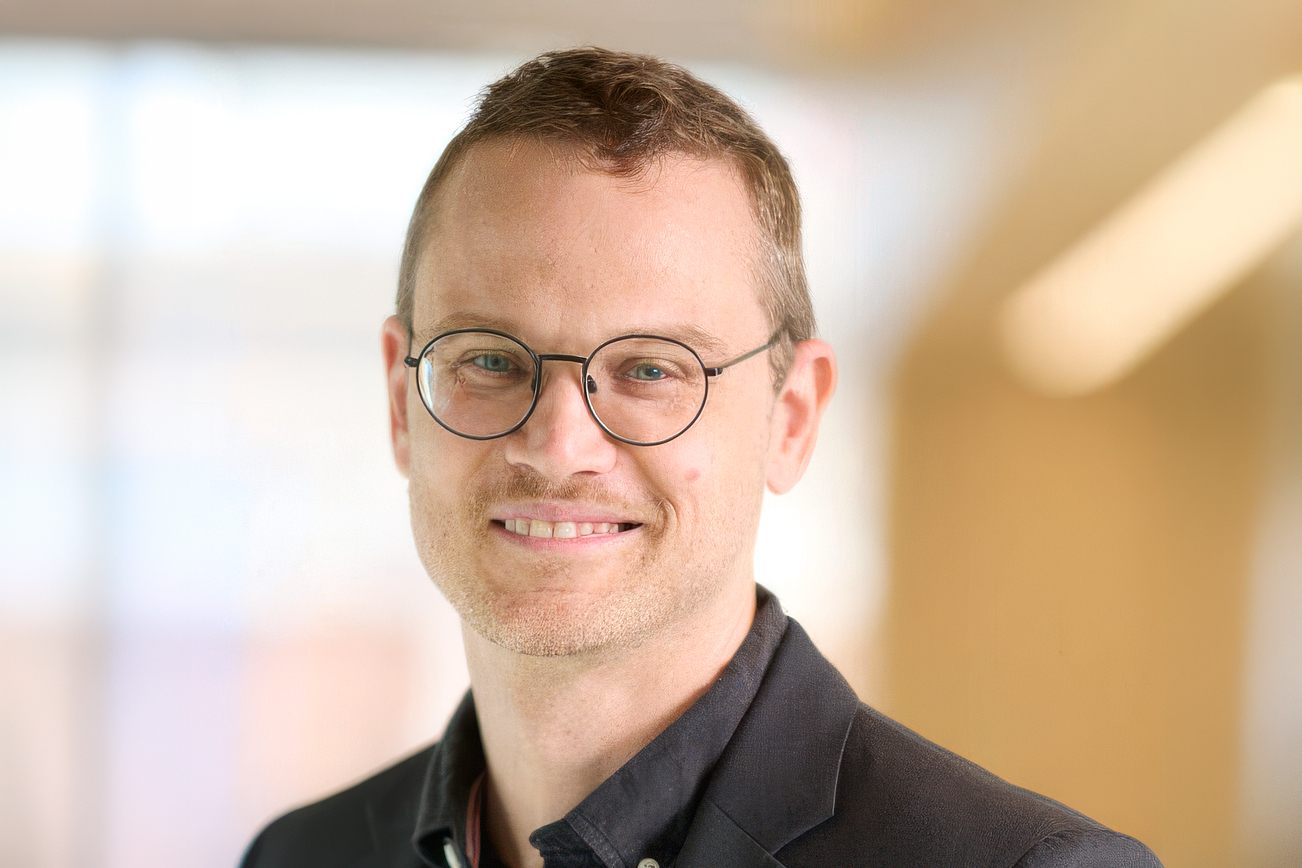
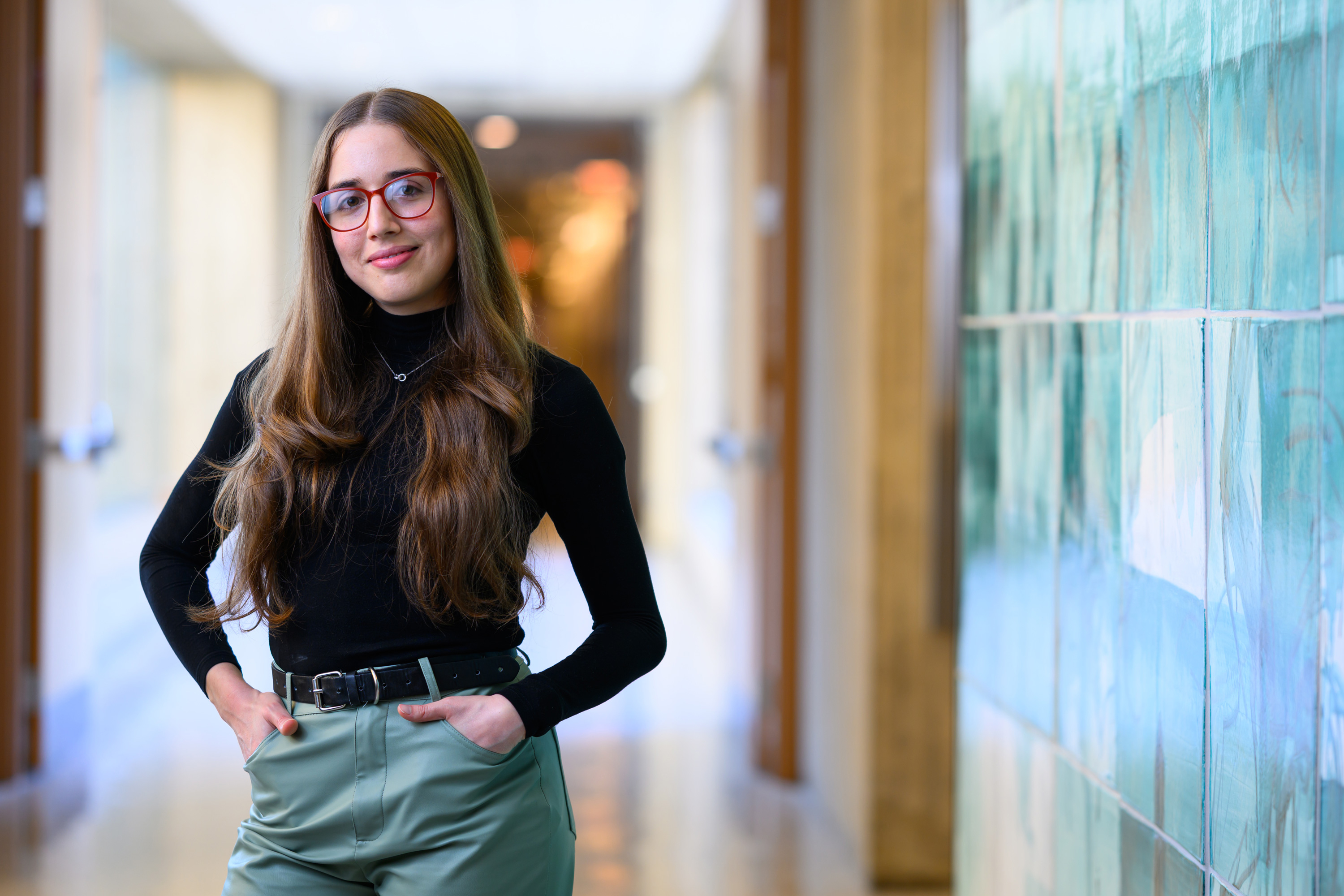
Lydia Bourouiba, the Japan Steel Industry Professor in the Department of Civil and Environmental Engineering, Department of Mechanical Engineering, and the Institute for Medical Engineering and Science (IMES), received the 2026 MathWorks Faculty Research Innovation Fellowship (FRIF). The MIT FRIFs were established to recognize midcareer faculty members for outstanding research contributions and leadership in their fields.
Bourouiba directs The Fluid Dynamics of Disease Transmission Laboratory and co-leads the Fluids and Health Network. Her research interests span a broad range of fundamental to applied curiosity-driven questions in fluid physics/dynamics, biophysics, out-of-equilibrium dynamics, and mathematical modeling. Her recent work focuses on the multi-scale dynamics of unsteady fluid fragmentation, splash and atomization, drops and bubbles, and phase transition relevant to addressing important industrial, energy, food, environmental, contamination, and health challenges.
“I was immediately fascinated by fluid physics upon first encounter,” Bourouiba says. “At the same time, I also had a pull to contribute part of the gained insights to applications in health, particularly for long-standing challenges that have deep impact on the lives of so many, such as infectious diseases.”
After receiving her PhD in fluid physics and out-of-equilibrium turbulence from McGill University in 2008, Bourouiba joined MIT as an Instructor in Applied Mathematics in the Department of Mathematics in 2010, and later as faculty. She credits “great colleagues—past and present” for impacting her work.
“Doc Edgerton’s legacy at the Edgerton Center gave me something precious: my first experiences in experiments in flow visualization. Coming from theory, I encountered something I hadn’t anticipated. High-speed imaging doesn’t just capture motion—it stops time itself, revealing phenomena hidden to the human eye and temporal scales and oiling the mind and thoughts for myriads of new ideas for modeling underlying physical processes,” she says. “Professor Haynes Miller’s excellence in pedagogy, passion, and care for foundational mathematics education was also a lasting inspiration.”
Bourouiba is an elected Fellow of the American Physical Society and the American Institute for Medical and Biological Engineering, a member of the Society for Industrial and Applied Mathematics, the American Mathematical Society, the Society for Mathematical Biology, and Sigma Xi. She has given more than 165 invited talks, including plenary, keynote, and distinguished and named and prize lectures at the National Academies of Sciences, Engineering, and Medicine. She also holds patents.
“Discretionary funding such as the MathWorks Faculty Research Innovation Fellowship allows us to explore truly novel and transformative ideas that do not yet have a home through traditional funding mechanisms,” Bourouiba says. “For the out-of-the-box, high-risk, high-reward work that has characterized our team’s research agenda, discretionary funding is of the utmost importance and fundamentally enabling. It can make or break our ability to pursue groundbreaking, risky, and unconventional ideas that most of the time end up being the most transformative and course-altering for our scientific discoveries and translation overall.”