Chris Caplice receives 2026 School of Engineering Distinguished Educator Award
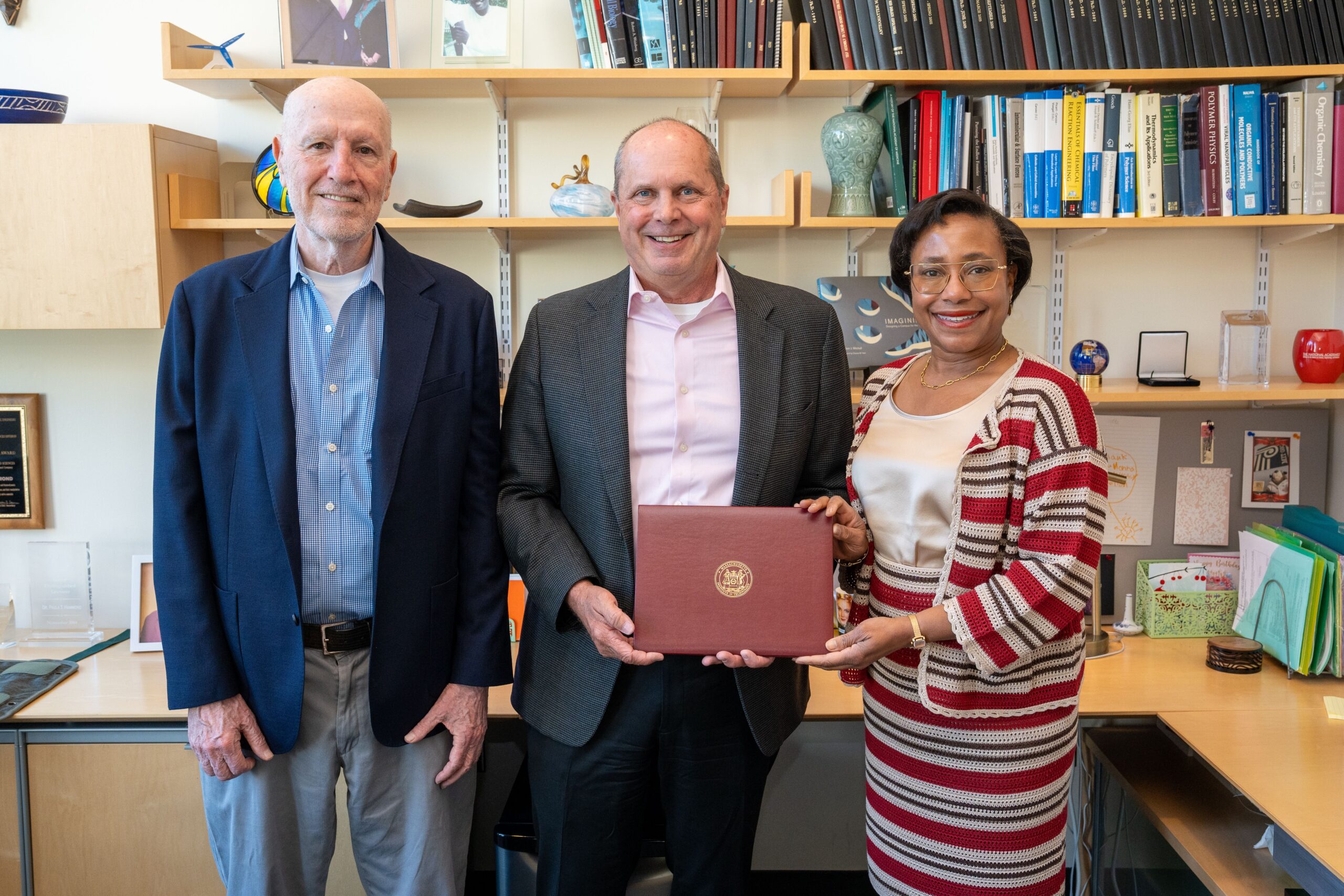
Chris Caplice, a Senior Research Scientist and the Executive Director of the MIT Center for Transportation and Logistics (CTL), is a recipient of the 2026 School of Engineering Distinguished Educator Award, which recognizes outstanding contributions to undergraduate and/or graduate education by members of its faculty and teaching staff.
Caplice is responsible for the planning and management of the research, education, and corporate outreach programs for CTL. He created and currently serves as Director of the MITx MicroMasters Program in Supply Chain Management, which was the first MicroMasters credential ever offered. He is also the founder of the MIT FreightLab, a research initiative that focuses on improving the way freight transportation is designed, procured, and managed. His primary research is in all aspects of freight transportation to include combinatorial procurement auctions, robust planning, portfolio management, performance metrics, and infrastructure design.
Caplice has taught the class SCM.260: Logistics and Systems for over 20 years and describes it as one of his favorite courses to teach.
“It is a fundamental course that dives into demand forecasting, inventory management, and transportation planning,” he says. “These are the three basic functions in logistics and supply chain management. In class, I demonstrate how they interact and relate to one another using both theoretical concepts and real-world examples.”
Caplice also created five MicroMasters courses, which build on the idea of combining theory with practice and conceptual learning with applied work.
“The goal is to get students to see beyond the day-to-day surface of a problem and recognize the underlying fundamental concepts,” he says.
Caplice’s approach to teaching was greatly influenced by Robert Herman, one of his professors at the University of Texas at Austin, where he received his master’s degree in civil engineering.
“I took his advanced Traffic Science class and was blown away by his incredible intellectual curiosity and willingness to help students understand complex concepts — at least to me!”
Caplice teaches classes in-person as well as online, presenting a unique challenge as an educator. His approach to teaching is shaped by his belief that the material and the delivery method need to match the learner’s objectives, goals, and abilities.
“Teaching in person is very different from teaching online in asynchronous videos,” he says. “In person, you want to engage the class, make it experiential, and interactive. On video, you cannot do that very well, so you need to have a lot of energy and excitement to keep the learners’ attention.”
The inspiration of teaching with excitement came from one of Caplice’s undergraduate professors at the Virginia Military Institute (VMI), Col. Donald Jamison, who taught Fluid Mechanics in the Civil Engineering Department.
“He was hands down the most engaging and energetic professor I ever had,” says Caplice. “I had the good fortune to teach with him years later when I returned to teach there after getting out of the Army. He is one of the reasons I decided to enter academia.”
Caplice received his PhD in Transportation and Logistics Systems from MIT. Prior to that, he taught at VMI for two years and served five years in the Army Corps of Engineers, achieving the rank of Captain. He was selected as the first Silver Family Research Fellow in 2016 in recognition of his contribution to supply chain education and research. Also in 2016, he received the Council of Supply Chain Management Professionals (CSCMP) Distinguished Service Award.
“I believe that CTL should win this award as a center, rather than me as an individual,” Caplice says. “Professor Yossi Sheffi, the Director for over 30 years, has created an atmosphere and culture at CTL that encourages and rewards not only research but also the dissemination of these ideas and concepts to students, executives, and practitioners. Every one of the more than two dozen research scientists at CTL is actively involved in not only their specific research, but also teaching to graduate students and practitioners alike. CTL is an incredibly unique place where teaching and disseminating new and innovative concepts and impacting actual practice are as important as discovering them in the first place.”