Centers and Labs

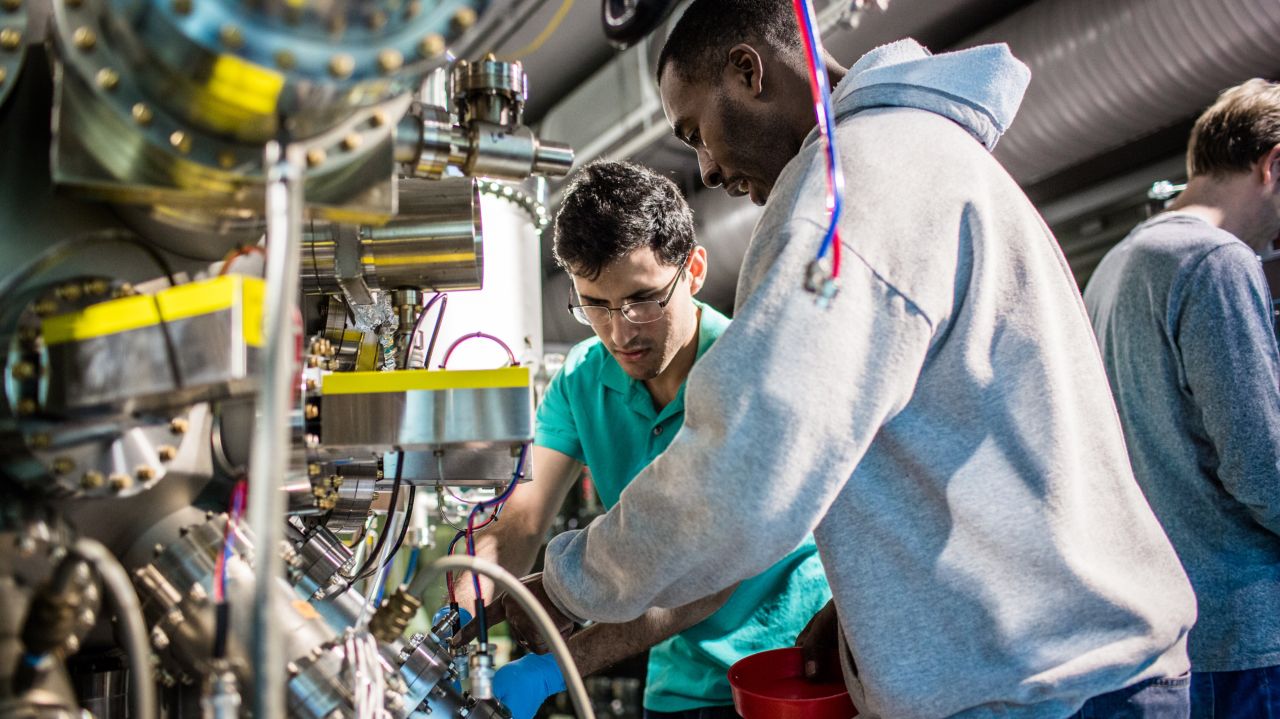
Centers and labs are the heartbeat of research at the MIT School of Engineering. Ranging from small, close-knit teams tucked into historic campus corridors to large interdisciplinary teams in entire buildings, these centers and labs are where ideas turn into breakthroughs. No matter their size or focus, they share a common purpose: to advance knowledge and make an impact.
Quick Links
Center for Transportation and Logistics (CTL)
For more than five decades, the MIT Center for Transportation and Logistics (MIT CTL) has been a global leader in supply chain management – advancing the field through research, education and industry engagement. By bringing together faculty, researchers, students, and corporate partners, MIT CTL transforms real-world challenges into innovative solutions that help organizations and societies thrive. Through its international SCALE Network, the Center extends this mission worldwide, fostering collaboration and amplifying MIT’s impact across every facet of supply chain and logistics.


Sociotechnical Systems Research Center (SSRC)
The MIT Sociotechnical Systems Research Center (SSRC) brings together experts from across disciplines to address the complex systems that define modern life—from healthcare and energy to infrastructure, the environment, and global development. Integrating engineering and the social sciences, SSRC develops holistic, systems-based approaches to better understand and improve the sociotechnical systems that shape our world.
Departmental Labs & Research Groups
Research teams across the School lead dozens of labs where groundbreaking discoveries take shape every day. Visit individual department pages to learn more about their research and impact.
- Aeronautics and Astronautics
- Biological Engineering
- Chemical Engineering
- Civil and Environmental Engineering
- Electrical Engineering and Computer Science
- Institute for Data, Systems and Society
- Institute for Medical Engineering and Science
- Materials Science and Engineering
- Mechanical Engineering
- Nuclear Science and Engineering
MIT Research Labs
Our researchers work across boundaries, collaborating with units throughout the Institute to drive discovery and impact. Many faculty, researchers, and students in the School of Engineering are affiliated with labs based in other MIT schools and offices — including the Schwarzman College of Computing and the Office of the Vice President for Research — strengthening connections that accelerate innovation across disciplines.